
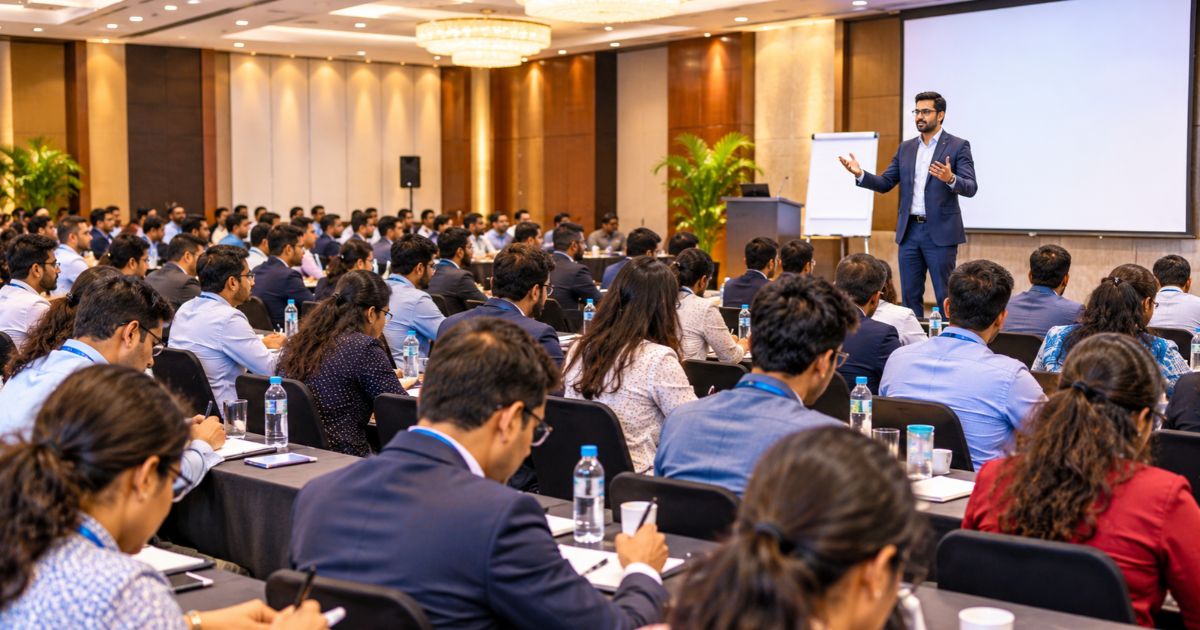
How to Develop Leadership Skills in Managers: 10 Behaviours That Drive Team Performance
Managers play a critical role in shaping workplace culture, improving employee engagement, and achieving organisational goals. However, being good at managing tasks does not automatically make someone an effective leader. Developing strong Leadership skills for managers requires a combination of self-awareness, communication, decision-making, coaching, and the ability to inspire people towards shared objectives. In today's competitive corporate environment, organisations need managers who can lead with confidence, handle workplace challenges, and bring out the best in their teams.
For businesses looking to strengthen their leadership capabilities, investing in structured development initiatives is becoming increasingly important. The right Leadership Skills Training for Managers helps professionals move beyond daily supervision and develop behaviours that support long-term business performance. Rather than focusing only on theoretical management concepts, effective leadership development encourages managers to practise practical behaviours that improve collaboration, accountability, and employee growth.
Why Leadership Development Matters for Modern Managers
The responsibilities of managers have evolved significantly. They are expected to manage performance, communicate business priorities, resolve conflicts, develop talent, and maintain team motivation while adapting to changing business demands.
A technically skilled employee may perform exceptionally well individually but may need additional capabilities when promoted into a managerial position. Leading people requires a different mindset, particularly when managing diverse personalities, competing priorities, and complex organisational expectations.
A well-designed Best Leadership Development Program for Managers helps bridge this gap by developing the practical capabilities required to lead people effectively.
Some important benefits include:
-
Improved team performance: Managers learn to align individual contributions with organisational objectives.
-
Better employee engagement: Supportive leadership creates an environment where employees feel valued.
-
Stronger accountability: Clear expectations encourage ownership and responsibility.
-
Effective communication: Managers become better at sharing information and addressing concerns.
-
Future leadership readiness: Developing managerial talent creates a stronger internal leadership pipeline.
According to the Chartered Institute of Personnel and Development (CIPD), effective people management involves trust-building, communication, coaching, mentoring, and conflict management. Its evidence review also highlights the positive contribution of management and leadership training to organisational outcomes.
10 Leadership Behaviours Every Manager Should Develop
Leadership is demonstrated through consistent actions rather than job titles. Managers who practise the following ten behaviours can build stronger relationships, improve team effectiveness, and contribute to sustainable organisational success.
1. Communicate Expectations with Clarity
Effective communication is one of the most important Leadership skills for managers. Employees perform better when they understand their responsibilities, priorities, deadlines, and expected outcomes.
Managers should communicate business objectives in a simple and structured manner instead of assuming that everyone understands the bigger picture.
Practical ways to improve communication include:
-
Explain individual responsibilities and performance expectations.
-
Encourage employees to ask questions and share suggestions.
-
Conduct regular team meetings with clear objectives.
-
Provide timely updates when priorities or business requirements change.
Clear communication reduces misunderstandings, improves coordination, and helps employees work towards common goals.
2. Practise Active Listening
Strong leaders understand that communication involves listening as much as speaking. Managers who listen carefully can identify workplace challenges, understand employee concerns, and make better decisions.
Active listening also helps employees feel respected and encourages open conversations.
Managers can develop this behaviour by avoiding interruptions, asking relevant questions, acknowledging different perspectives, and responding thoughtfully.
When employees believe their opinions matter, they are more likely to participate actively and contribute valuable ideas.
3. Build a Coaching and Mentoring Mindset
An effective manager does not simply assign work and monitor results. They help employees develop the skills and confidence required to perform independently.
Coaching encourages individuals to identify solutions, overcome challenges, and take responsibility for their professional development.
For example, instead of immediately correcting an employee's mistake, a manager can ask questions such as:
-
What do you think caused this challenge?
-
What alternative approach could you try?
-
What support would help you improve?
-
What have you learned from this experience?
This approach turns everyday workplace situations into learning opportunities.
Structured Corporate Leadership Development Programs in India can help managers practise coaching conversations, provide developmental feedback, and understand how different employees respond to guidance.
4. Delegate Responsibilities and Build Ownership
Micromanagement limits employee development and prevents managers from focusing on higher-level responsibilities. Effective leaders understand when to delegate and how to give employees the authority to complete assigned work.
Delegation involves more than distributing tasks. Managers must consider an individual's competence, experience, commitment, and readiness before assigning responsibilities.
A practical delegation approach includes:
-
Define the expected outcome.
-
Assign responsibilities according to individual capabilities.
-
Clarify available resources and decision-making authority.
-
Establish reasonable checkpoints.
-
Allow employees to take ownership of the results.
This behaviour improves productivity while preparing employees for greater responsibilities.
5. Demonstrate Emotional Intelligence
Managers regularly interact with employees who have different personalities, communication styles, motivations, and professional expectations. Emotional intelligence helps leaders understand their own reactions and respond appropriately to others.
It involves four important capabilities:
-
Self-awareness: Recognising personal emotions, strengths, and limitations.
-
Self-regulation: Managing reactions during stressful situations.
-
Empathy: Understanding other people's perspectives and concerns.
-
Relationship management: Building productive professional relationships.
Managers with strong emotional intelligence are better equipped to handle disagreements, support employees, and maintain constructive workplace relationships.
6. Make Informed and Timely Decisions
Decision-making is an essential managerial responsibility. Delayed decisions can affect project timelines, employee confidence, and business performance.
Effective managers evaluate available information, consider potential risks, consult relevant stakeholders, and choose an appropriate course of action.
They should also understand that not every decision requires extensive discussion. Routine operational matters may require quick action, whereas strategic decisions often demand deeper analysis.
Developing this behaviour helps managers become more confident, accountable, and solution-oriented.
7. Give Constructive and Regular Feedback
Feedback should not be limited to annual performance reviews. Employees need regular guidance to understand what they are doing well and where improvements are required.
Effective managers provide feedback that is specific, timely, respectful, and focused on observable behaviour.
For example, instead of saying, "Your communication needs improvement," a manager could explain, "The project update would be more effective if you shared the key risks and next steps at the beginning."
Constructive feedback should include:
-
Recognition of positive contributions.
-
Clear identification of improvement areas.
-
Practical suggestions for development.
-
Opportunities for employees to respond.
-
Follow-up discussions to review progress.
Consistent feedback strengthens trust, supports continuous learning, and improves individual accountability.
8. Manage Workplace Conflicts Professionally
Differences in opinions, working styles, and priorities are common in professional environments. However, unresolved conflicts can damage relationships and reduce team productivity.
Managers must recognise disagreements early and address them objectively.
Instead of taking sides, effective leaders listen to everyone involved, identify the underlying issue, and encourage constructive discussion.
They should focus on finding solutions rather than assigning blame.
Developing Leadership Skills Training for Managers around conflict resolution helps professionals manage difficult conversations, negotiate solutions, and maintain a respectful team environment.
9. Encourage Collaboration and Psychological Safety
High-performing teams depend on trust, mutual respect, and effective collaboration. Managers should create an environment where employees feel comfortable sharing ideas, asking questions, and raising concerns without unnecessary fear of embarrassment or punishment.
This is particularly important in organisations where teams work across departments, locations, or different professional backgrounds.
Managers can encourage collaboration by:
-
Recognising individual and collective contributions.
-
Inviting different perspectives during discussions.
-
Supporting knowledge-sharing activities.
-
Addressing disrespectful workplace behaviour.
-
Treating mistakes as opportunities for learning when appropriate.
A psychologically safe environment encourages participation and helps teams solve problems more effectively.
10. Lead by Example and Demonstrate Accountability
Employees observe managerial behaviour closely. A manager who expects punctuality, transparency, responsibility, and professionalism must demonstrate these qualities personally.
Leading by example builds credibility because employees are more likely to trust leaders whose actions match their expectations.
Managers should take responsibility for their decisions, acknowledge mistakes, fulfil commitments, and maintain professional standards.
This behaviour establishes a culture of accountability in which responsibility is shared rather than imposed through supervision alone.
How Organisations Can Build Leadership Capabilities in Managers
Developing leadership behaviours requires more than attending a one-time workshop. Organisations need a structured approach that allows managers to understand leadership concepts, practise new behaviours, receive feedback, and apply their learning in real workplace situations.
A successful Best Leadership Development Program for Managers should focus on the actual challenges managers face in their roles.
Here are five important elements organisations should consider.
1. Identify Individual Leadership Development Gaps
Every manager has different strengths and improvement areas. Some may need support with communication, while others may benefit from developing delegation, coaching, or decision-making capabilities.
Leadership assessments, behavioural tools, and structured feedback can help organisations identify these gaps and create relevant development plans.
2. Combine Practical Learning with Real-World Experiences
Managers should have opportunities to apply leadership concepts rather than simply study them.
Role-playing exercises, business simulations, group discussions, and workplace assignments help participants practise challenging conversations and managerial decisions in realistic situations.
3. Follow the 70-20-10 Learning Approach
The 70-20-10 model offers a useful framework for leadership development:
-
70% Experiential Learning: Learning through workplace assignments, challenging responsibilities, and practical experiences.
-
20% Social Learning: Developing through mentoring, coaching, peer discussions, and feedback.
-
10% Formal Learning: Participating in structured training sessions, workshops, and leadership education.
This approach encourages continuous development and helps managers translate learning into everyday behaviours.
4. Encourage Continuous Coaching and Feedback
Leadership development should continue beyond formal training sessions. Regular coaching conversations and feedback meetings help managers understand their progress and identify areas that require further attention.
Organisations should encourage senior leaders and HR teams to support managers throughout their development journey.
5. Measure Behavioural Improvement and Team Outcomes
Leadership training should deliver measurable workplace improvements. Organisations can evaluate its effectiveness through indicators such as:
-
Employee engagement and satisfaction.
-
Improvement in team productivity.
-
Quality of communication and collaboration.
-
Delegation and accountability levels.
-
Employee retention and internal promotions.
-
Progress against individual development goals.
These indicators help businesses understand whether leadership development is creating meaningful changes.
Choosing the Right Corporate Leadership Development Program in India
Selecting a suitable development programme is an important decision for HR leaders, learning and development professionals, and business executives.
A programme should address the organisation's specific leadership challenges rather than deliver generic management content.
Before selecting a training partner, consider the following factors:
|
Evaluation factor |
What organisations should look for |
|---|---|
|
Customisation |
Content aligned with business objectives and managerial responsibilities |
|
Practical methodology |
Role plays, case studies, simulations, and experiential learning |
|
Expert facilitation |
Experienced leadership facilitators and coaches |
|
Behavioural development |
Focus on communication, accountability, coaching, and collaboration |
|
Learning reinforcement |
Post-training coaching, feedback, and workplace application |
|
Measurable outcomes |
Clear development goals and performance indicators |
The right programme should help managers understand not only what effective leadership looks like but also how to demonstrate it consistently.
How The People 1st Supports Leadership Development
Organisations looking to strengthen managerial effectiveness need development initiatives that connect leadership concepts with practical workplace behaviour.
The People 1st focuses on helping professionals and organisations build capabilities, strengthen commitment, understand individual differences, and develop a performance-oriented culture.
Its leadership development approach emphasises the distinction between line management responsibilities and leadership behaviours. This distinction is important because managers must move beyond allocating tasks and monitoring results to inspiring people, building relationships, and developing team capabilities.
The organisation also incorporates behavioural development, experiential learning, and the 70-20-10 learning model into its approach.
For businesses seeking Corporate Leadership Development Programs in India, this kind of practical and behaviour-focused development can help managers strengthen their leadership effectiveness and contribute to stronger organisational performance.
Explore the Leadership Development Program by The People 1st to learn more about developing managerial and organisational leadership capabilities.
Final Thoughts
Developing effective managers is essential for building productive teams and achieving sustainable business growth. Strong leadership is not defined by authority or designation but by the behaviours professionals demonstrate every day.
From active listening and emotional intelligence to coaching, delegation, accountability, and conflict resolution, these ten behaviours create a foundation for effective people management.
Investing in structured Leadership skills for managers helps organisations prepare professionals for evolving responsibilities while creating a workplace culture built on trust, collaboration, and continuous improvement.
For organisations that want to develop confident and capable managers, choosing the right Best Leadership Development Program for Managers can be an important step towards stronger teams, better employee experiences, and long-term business success.