
How Strong Leadership Drives Better Business Performance
Strong leadership is often discussed as a soft business skill, but its impact is anything but soft. The way managers set priorities, communicate expectations, coach employees and make decisions directly influences productivity, employee engagement, customer relationships and ultimately business performance.
In a competitive market, organisations cannot depend only on good products, technology or ambitious targets. They also need leaders who can turn strategy into action and help teams perform consistently.
This is why leadership development programs, manager capability building and sales leadership. The goal is not simply to create better managers. It is to build leaders who can improve execution, develop people and deliver measurable business outcomes.
Why Leadership Has a Direct Impact on Business Performance
A leader creates the environment in which people work. Clear priorities, effective communication and accountability can help teams focus on what matters most, while inconsistent leadership can create confusion and slow decision-making.
Strong leaders typically contribute to business performance in several ways:
- They translate business strategy into clear team objectives.
- They establish accountability without creating unnecessary pressure.
- They make faster and more informed decisions.
- They coach employees instead of simply giving instructions.
- They identify performance gaps early.
- They encourage collaboration between functions.
- They build a culture of continuous improvement.
Leadership therefore becomes the connection between organisational strategy and everyday execution.
For this reason, companies looking for sustainable growth should view leadership capability as a business investment rather than an isolated HR initiative.
The Role of Managers in Business Performance
Managers occupy a particularly important position in an organisation. Senior leaders establish direction, while managers turn that direction into daily actions.
A manager may be responsible for targets, budgets, projects and processes, but their effectiveness also depends on how well they lead people.
Consider a sales manager. Simply telling a sales representative to increase revenue is unlikely to solve a performance problem. An effective manager will examine the pipeline, customer conversations, territory planning, conversion rates and capability gaps before deciding what needs to change.
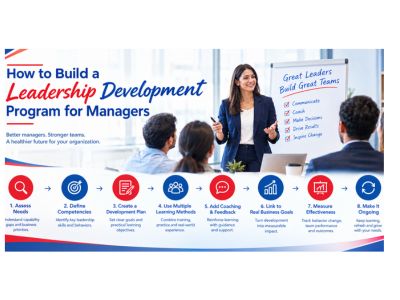
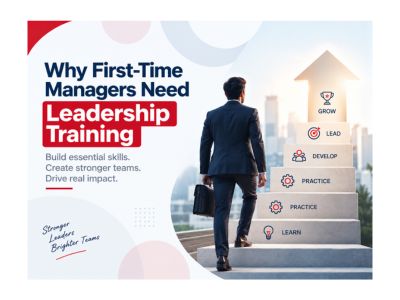
This is where Leadership Skills Training for Managers can make a meaningful difference. Instead of focusing only on theoretical leadership concepts, effective programs should help managers practise coaching, feedback, delegation, decision-making, conflict management and performance conversations.
Why Leadership Development Should Be Practical
One of the biggest challenges with corporate training is the gap between learning and application.
Employees may understand a leadership model during a workshop but struggle to apply it when they return to a difficult customer conversation, an underperforming team member or a high-pressure business decision.
An effective Best Leadership Development Program for Managers should therefore connect learning with real workplace situations.
Practical leadership development can include:
- Business simulations and case studies
- Role plays based on real management challenges
- Feedback and reflection
- One-to-one coaching
- Action plans
- Manager-led reinforcement
- Measurement of behavioural and business outcomes
The People 1st takes an application-oriented approach to capability development, combining experiential learning, coaching and practical workplace application. Its leadership work includes programs designed around real leadership and people-management challenges.
Businesses evaluating Corporate Leadership Development Programs in India should therefore look beyond the number of modules or training hours. The more important question is whether participants actually change the way they lead after the program.
Building Leadership Skills That Matter
Leadership is not one skill. It is a combination of behaviours that help people and organisations perform effectively.
Some of the most important leadership skills for managers include:
1. Communication
Managers need to communicate expectations clearly and adapt their communication style to different people and situations.
2. Coaching
High-performing managers do not solve every problem themselves. They help employees understand challenges, identify solutions and take ownership.
3. Decision-Making
Leaders regularly have to make decisions with incomplete information. Strong judgement, prioritisation and risk assessment are essential.
4. Delegation
Effective delegation is not simply assigning tasks. It involves giving people appropriate responsibility, authority and clarity.
5. Feedback
Timely, specific feedback helps employees understand what they are doing well and where improvement is required.
6. Accountability
Good leaders create clear commitments and follow up consistently without turning accountability into micromanagement.
These capabilities become particularly important when an organisation is scaling and managers are responsible for larger or more diverse teams.
Leadership and Sales Performance Are Closely Connected
Leadership becomes even more commercially important in sales organisations.
Sales performance depends on more than individual selling ability. Managers influence pipeline quality, sales discipline, customer engagement, forecasting, coaching and execution.
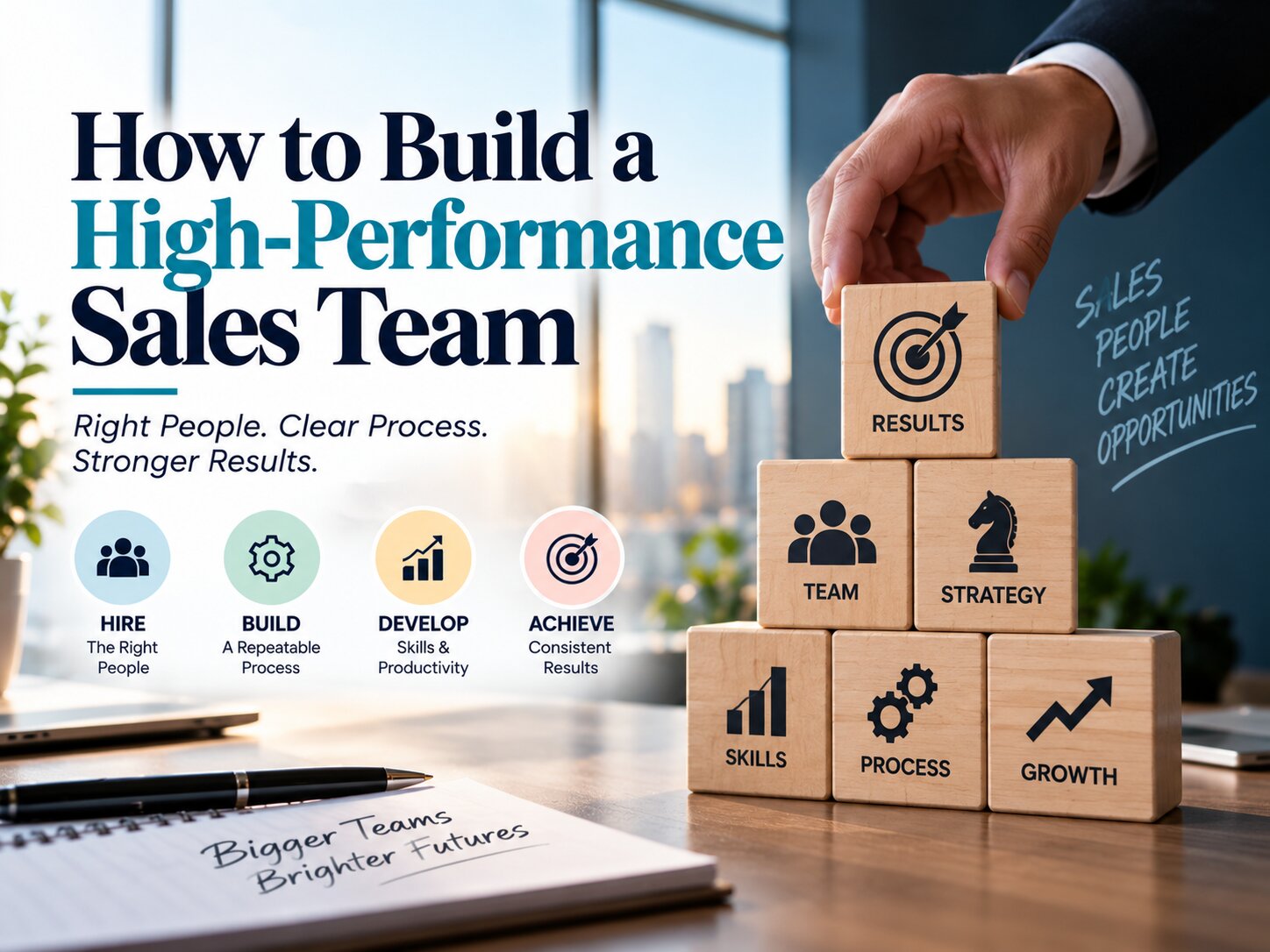
This is why Sales Leadership Development Program initiatives are increasingly important for organisations that want their sales managers to become performance leaders rather than administrators.
A capable sales leader can help teams:
- Improve sales-call quality
- Strengthen territory management
- Improve opportunity management
- Coach representatives in the field
- Build stronger customer relationships
- Improve sales-process discipline
- Measure and improve execution
The People 1st's sales capability approach focuses on sales processes, functional competencies, behaviour development, execution and measurement. Its programs also cover areas such as territory management, sales calls, distributor management, sales-team assessment and field-force effectiveness.
Businesses looking to strengthen these capabilities can explore Sales Capability Development by The People 1st.
Where Corporate Sales Training Fits In
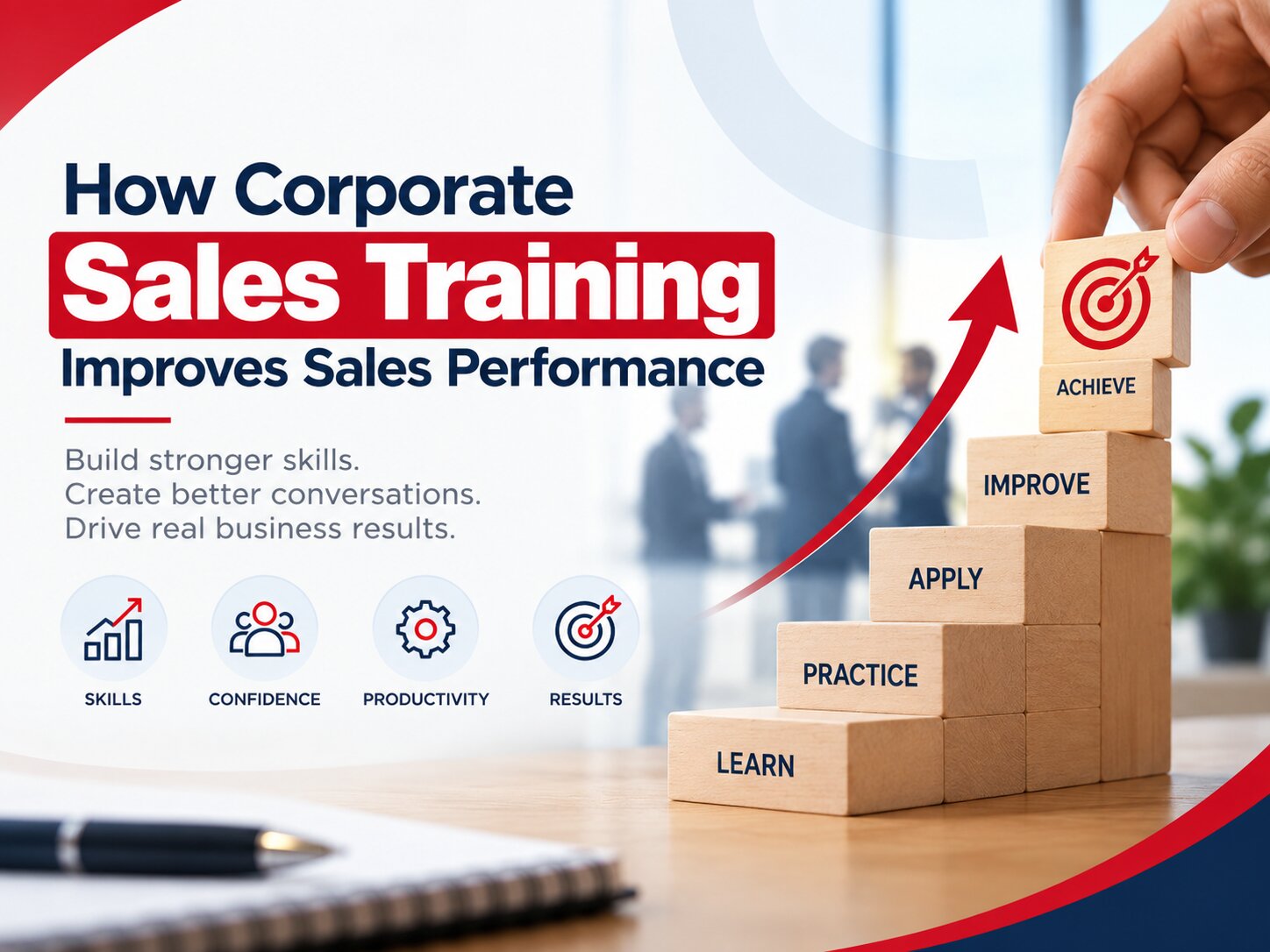
Corporate Sales Training is most effective when it addresses an actual business challenge rather than delivering generic selling techniques.
For example, a company experiencing declining conversions may need to examine whether the issue comes from prospecting, discovery conversations, value communication, objection handling, negotiation or follow-up.
Similarly, a sales team with a healthy pipeline but weak revenue conversion may require better opportunity management and coaching rather than another product-knowledge workshop.
This is why Sales Performance Improvement Training should ideally begin with a diagnosis of the capability or execution gap.
Training can then focus on the behaviours that are most likely to influence performance.
Measuring the Business Impact of Leadership Training
Leadership development should not end when the workshop finishes.
Organisations can measure its effectiveness through a combination of behavioural and business indicators.
Depending on the program, these may include:
- Employee engagement indicators
- Manager effectiveness scores
- Quality and frequency of coaching
- Team productivity
- Employee retention
- Sales conversion rates
- Pipeline quality
- Revenue performance
- Customer satisfaction
- Achievement of business targets
Not every leadership outcome will appear immediately in revenue figures. Behavioural changes often happen first, followed by improvements in team execution and business results.
A sensible measurement framework should therefore establish a baseline before training and review progress after implementation.
Leadership Development Is an Ongoing Process
Leadership capability cannot be built through a single workshop alone.
Managers operate in changing environments. New employees join teams, business priorities shift, customers become more demanding and technology changes the way work is performed.
Continuous development helps leaders adapt.
This can include structured learning, coaching, peer discussions, manager forums, field observation and regular feedback. Over time, these activities can turn leadership principles into everyday management habits.
Organisations exploring leadership development training should therefore consider how learning will be reinforced after the formal program.
For companies seeking a structured approach, The People 1st Leadership Development focuses on developing leadership capabilities through practical and experiential approaches. The company's work includes leadership programs for managers and teams, with an emphasis on translating learning into workplace behaviour.
Strong Leadership Creates a Performance Culture
The strongest organisations do not treat leadership as the responsibility of a few senior executives. They build leadership capability across management levels.
When managers communicate clearly, coach effectively, hold people accountable and connect individual work with business objectives, teams are more likely to execute with consistency.
The result is a stronger performance culture where employees understand not only what they need to achieve, but also why it matters and how they can improve.
Ultimately, strong leadership drives better business performance because leaders influence the people, decisions and behaviours that determine how strategy is executed.
For organisations in India, investing in Corporate Leadership Development Programs in India, Leadership Skills Training for Managers, Corporate Sales Training and Sales Leadership Development Program initiatives can help build the capabilities required for sustainable growth.
The real measure of leadership development is not how impressive the training room feels on the day. It is what managers and teams do differently when they return to work—and whether those changes contribute to better performance.