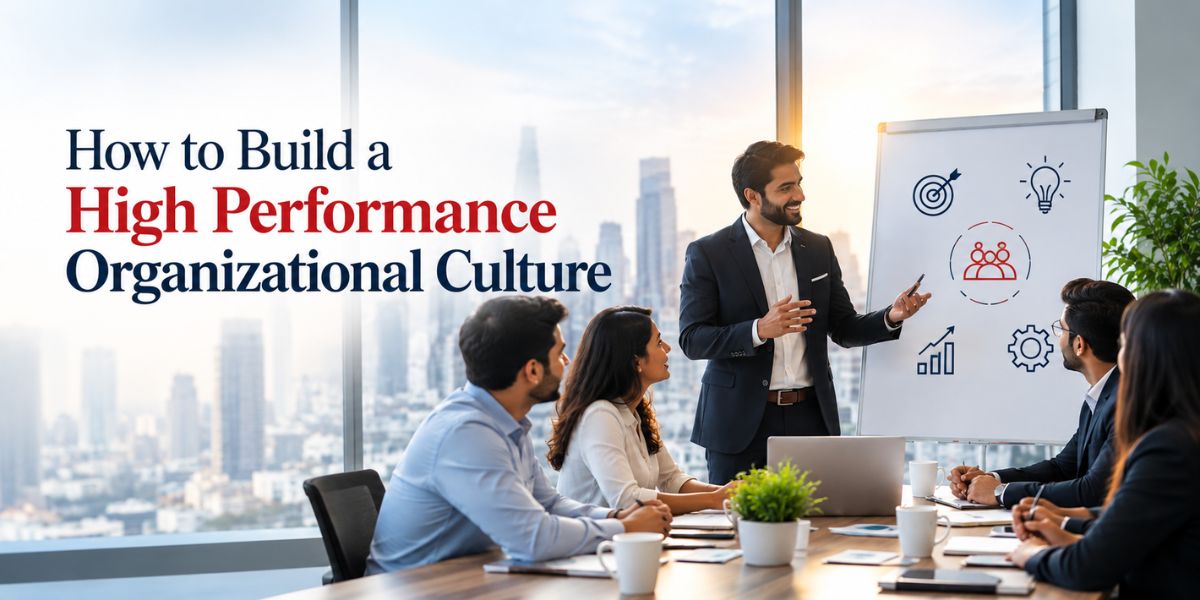
How to Build a High Performance Organizational Culture
A company can have talented employees, strong products, and ambitious goals, yet still struggle to perform consistently. One common reason is the culture surrounding those people. The way employees communicate, make decisions, handle mistakes, work together, and respond to customers can have a direct effect on organizational performance.
This is why how to build organizational culture has become an important question for business leaders. Culture is not created by writing a few values on a wall or adding them to an employee handbook. It develops through everyday behaviours, leadership decisions, workplace expectations, and the experiences employees have inside the organization.
A high performance organizational culture creates an environment where people understand what is expected, take responsibility for their work, collaborate effectively, and continuously look for ways to improve.
What Is Organizational Culture?
Before discussing how to build organizational culture, it is important to understand what culture actually means.
Organizational culture refers to the shared values, behaviours, beliefs, expectations, and working practices that influence how people operate within a company.
Think about how employees behave when a manager is not present. Do they still take ownership? Do they raise problems early? Do teams share information? Are mistakes discussed constructively? Do employees feel comfortable challenging an ineffective process?
Those everyday behaviours reveal more about organizational culture than a written mission statement.
Culture develops through several factors, including:
- Leadership behaviour
- Communication practices
- Employee expectations
- Recognition and rewards
- Decision making
- Hiring and onboarding
- Performance management
- Learning and development
- Team relationships
- Organizational values
A healthy culture does not mean everyone agrees all the time. It means people have a clear understanding of how disagreements, challenges, responsibilities, and decisions should be handled.
Why Does Organizational Culture Matter?
The importance of organizational culture becomes obvious when you look at how strongly workplace behaviour influences performance.
Employees do not operate in isolation. Their decisions are shaped by what the organization rewards, tolerates, encourages, and discourages.
A culture that rewards accountability can encourage employees to take ownership. A culture that ignores poor communication may allow problems to continue. A workplace that values learning can make employees more willing to develop new capabilities.
Culture can influence:
- Employee engagement
- Collaboration
- Productivity
- Retention
- Leadership effectiveness
- Customer experience
- Innovation
- Accountability
- Adaptability
This does not mean culture alone determines business results. Strategy, market conditions, resources, technology, and operational execution also matter. Culture is one part of the system that determines how effectively those resources are used.
How to Build a High Performance Culture
Knowing how to build a high performance culture requires more than introducing motivational activities. High performance comes from creating clear expectations and reinforcing behaviours that support organizational objectives.
1. Define What High Performance Means
Employees cannot consistently deliver expectations they do not understand.
Leaders should clearly define what high performance means within their organization. It could involve customer focus, quality, speed, innovation, collaboration, revenue generation, operational accuracy, or a combination of these factors.
Make expectations specific.
Instead of saying “take ownership,” explain what ownership looks like in practice. Employees should know how they are expected to communicate problems, make decisions, meet commitments, and respond when something goes wrong.
2. Make Leaders Responsible for Culture
Leadership has a major influence on workplace behaviour.
The question of how leadership affects organizational culture can be answered by observing what employees see from their managers every day.
Leaders influence culture through:
- The behaviour they demonstrate
- The standards they enforce
- How they respond to mistakes
- How they handle conflict
- How they recognize employees
- How consistently they communicate
- The decisions they make under pressure
If leaders ask employees to communicate openly but punish people for raising concerns, employees will quickly learn that openness is not actually valued.
Culture becomes credible when leadership behaviour matches organizational expectations.
Organizations looking to strengthen leadership capability can explore Leadership Development as part of a broader people development strategy.
3. Build Accountability Without Creating Fear
Accountability is a key characteristic of a high performance organizational culture, but accountability should not be confused with punishment.
A healthy accountability system makes responsibilities clear and ensures people follow through on commitments.
Employees should understand:
- What they are responsible for
- What outcomes are expected
- How performance will be measured
- When progress should be reviewed
- What happens when expectations are not met
Leaders also need to hold themselves accountable. If managers consistently miss deadlines, avoid difficult conversations, or fail to follow agreed processes, expecting employees to behave differently creates distrust.
4. Invest in Employee Development
People cannot maintain high performance if their skills remain static while their responsibilities continue to grow.
Organizations should identify the capabilities employees need today and those they will need in the future.
Development can include:
- Coaching
- Mentoring
- Leadership development
- Technical learning
- Communication training
- Peer learning
- Practical assignments
- Feedback and performance conversations
Development should also be connected to real work. A workshop may introduce a concept, but employees need opportunities to practise that concept before it becomes a workplace habit.
5. Understand Organizational Culture and Employee Engagement
The relationship between organizational culture and employee engagement is important because employees are influenced by the environment in which they work.
Engagement is not simply about making employees happy. It involves the level of connection, involvement, and commitment people have toward their work and organization.
Employees are more likely to engage when they experience:
- Clear expectations
- Meaningful work
- Fair treatment
- Recognition
- Opportunities to develop
- Supportive managers
- Open communication
- A sense of responsibility
Leaders should regularly listen to employees instead of assuming they already understand what people need.
Employee surveys, one to one discussions, feedback sessions, and exit interviews can provide useful information about cultural strengths and weaknesses.
6. Encourage Learning From Mistakes
A high performance culture should not treat every mistake as a personal failure.
Some mistakes result from negligence and require accountability. Others happen because of unclear processes, insufficient training, poor communication, or reasonable decisions made under uncertainty.
Leaders should distinguish between these situations.
When something goes wrong, ask:
- What happened?
- Why did it happen?
- Was the process clear?
- Did the employee have the required skills?
- Was the decision reasonable based on the available information?
- What can prevent the problem from happening again?
This approach encourages problem solving instead of creating a workplace where employees hide problems.
7. Recognize the Behaviours You Want to See
Employees pay attention to what gets recognized.
Recognition does not always need to involve financial rewards. Specific feedback can be powerful when it clearly connects an employee's behaviour with an organizational objective.
For example, instead of simply saying “well done,” a manager might recognize an employee for identifying a customer problem early and coordinating with another department to resolve it.
That tells the wider team exactly what behaviour the organization values.
8. Measure Culture and Performance Together
The characteristics of a high performance culture should eventually become visible through workplace behaviours and business outcomes.
Organizations can track both quantitative and qualitative indicators.
Useful measures may include:
- Employee engagement results
- Voluntary turnover
- Absenteeism
- Internal promotion rates
- Customer satisfaction
- Productivity measures
- Goal achievement
- Employee development progress
- Quality indicators
No single metric can accurately measure organizational culture. Leaders should look for patterns across multiple sources of information.
How to Improve Organizational Culture Over Time
Understanding how to improve organizational culture is different from creating culture from scratch. Every established organization already has cultural habits, including some that leaders may not recognize.
Start by identifying the gap between the culture the organization wants and the culture employees actually experience.
Ask employees:
- What behaviours are rewarded here?
- What behaviours are discouraged?
- What makes it difficult to perform well?
- How comfortable are people raising concerns?
- What could managers do differently?
- Which workplace practices should change?
The answers can reveal problems that leadership teams may overlook.
Change should then happen gradually through leadership behaviour, communication, policies, development, recognition, and accountability.
Create a Culture That Supports Business Performance
Learning how to create a positive workplace culture is not about making the workplace comfortable at all times. A positive culture can still have demanding goals, difficult conversations, high standards, and strong accountability.
The difference is that employees understand the standards, receive appropriate support, and are treated fairly while being held responsible for their work.
At The People 1st, organizational development can be approached by connecting leadership capability, employee development, and business objectives rather than treating culture as a separate HR initiative.
Sales teams, in particular, may need additional capability development because their performance depends heavily on leadership, communication, coaching, accountability, and execution. Sales Performance Improvement Training can support organizations that are looking to strengthen these areas within their sales function.
Final Thoughts
A strong organizational culture is built through repeated behaviours, not slogans. Leaders establish expectations, employees reinforce those expectations, and organizational systems determine which behaviours continue over time.
The importance of organizational culture becomes clear when you recognize that culture affects how people actually work when faced with pressure, uncertainty, conflict, and competing priorities.
Building a high performance organizational culture therefore requires consistency. Leaders need to model the standards they expect, employees need opportunities to develop, accountability needs to be fair, and performance needs to be measured thoughtfully.
The goal should not be to create a workplace where everyone behaves identically. It should be to create an environment where people understand the organization's expectations, have the capability to meet them, and feel responsible for contributing to shared objectives.
A well structured Sales Leadership Development Program can also help sales leaders translate these cultural principles into everyday team behaviours. When leadership, people development, accountability, and organizational values reinforce one another, culture becomes a practical driver of performance rather than simply a statement on a company website.